Tea and Viskothu: The Dutch Word That Became Part of Sri Lankan Tea Time
When Tea Needed Something Beside It
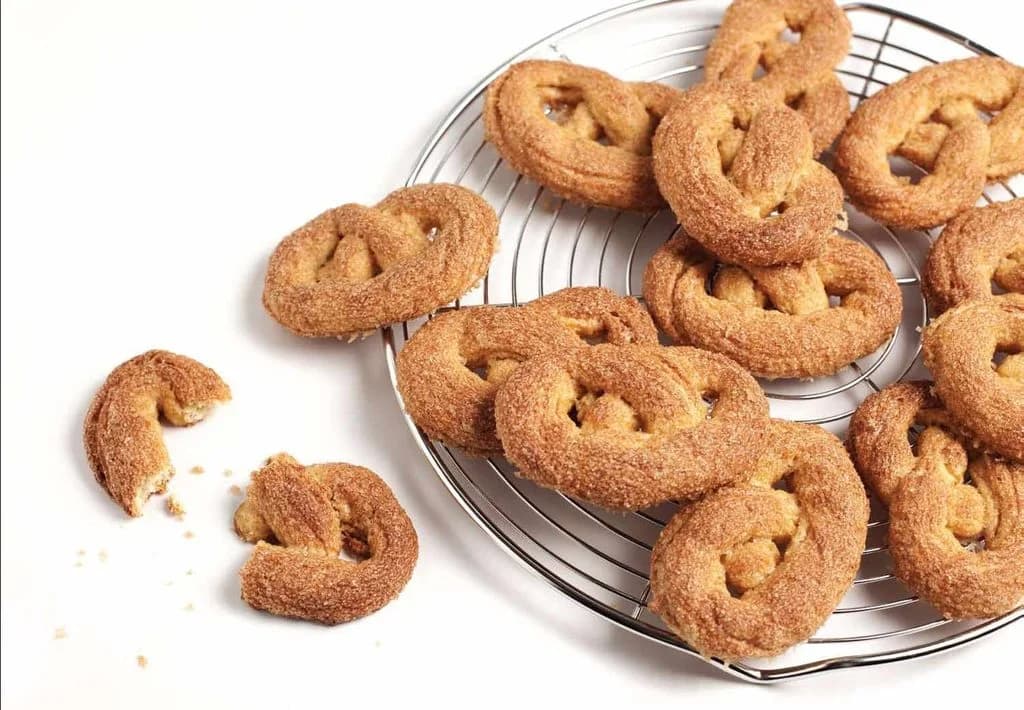
There was a time when tea was rarely served on its own. A pot would arrive at the table, usually strong and dark, with milk added generously. Beside it there would be something small to eat: a slice of butter cake, perhaps, a rusk, a piece of bread, or a few biscuits (Viskothu) placed on a plate without much ceremony.In many Sri Lankan homes, this was simply part of the day. Tea in the afternoon.
Tea when someone came to visit. Tea after a long journey. Tea when there was not much else in the house, but you still wanted to offer something. And very often, there was viskothu.For anyone who grew up around old tea shops, bakeries or railway refreshment rooms, the combination is almost inseparable from memory. A hot cup of tea, slightly too sweet, and a biscuit on the side. Sometimes two.
A British Habit With an Older Word
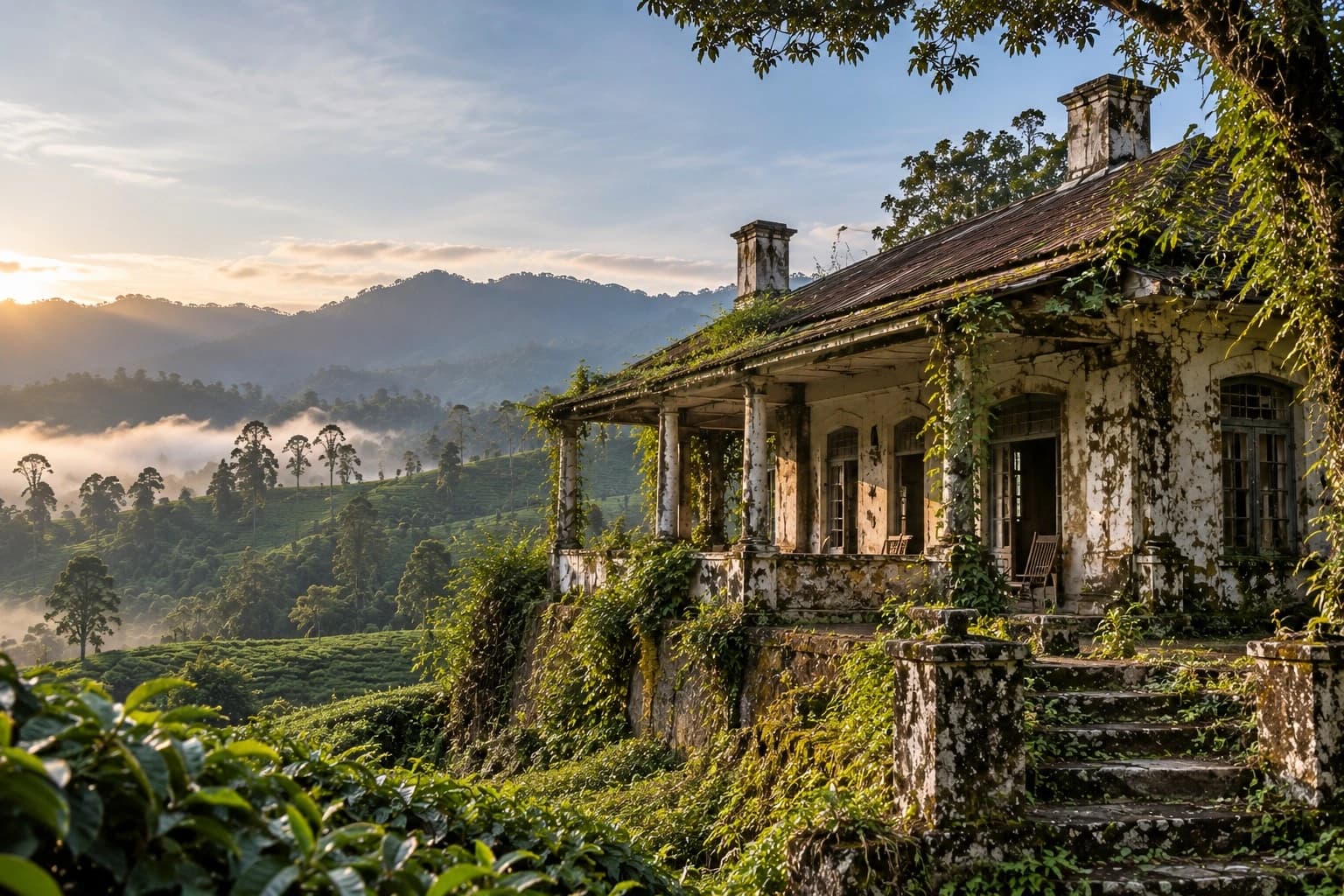
The tea has an obvious connection with British Ceylon. The word viskothu, however, appears to belong to a much older chapter. It reaches back to the Dutch.By the late nineteenth and early twentieth centuries, tea had become part of the everyday landscape of Ceylon. It was no longer confined to the plantations where it was grown or the export warehouses of Colombo. Tea followed the railway lines into the hill country. It appeared in station refreshment rooms, estate bungalows, rest houses and roadside stalls.
Travellers waiting for trains at places such as Kandy, Hatton, Nanu Oya or Badulla could expect tea somewhere along the journey. The ritual was simple: a thick cup or pot, milk, sugar, and something baked. In the hill country especially, it is easy to imagine how naturally the habit took hold. Cold mornings, mist outside the window, a long railway journey ahead, and something hot to drink before the train moved on.
The Biscuit Beside the Cup
The biscuit became part of that world. Ceylon’s old bakeries helped make it ordinary. Long before supermarket shelves filled with brightly coloured packets, biscuits could be bought from glass jars behind wooden counters. Bakeries sold bread, buns, rusks, cakes and plain biscuits by weight or by number. Tea shops kept similar jars within reach.
Older Colombo neighbourhoods had them. So did small towns in the hills and along the coast. Some bakeries disappeared. Others changed beyond recognition. But the smell of bread coming from an old bakery in the morning, the glass display cases and the biscuit jars are memories that still survive for many people.And the familiar word for those biscuits was often viskothu.
From Beschuit to Viskothu
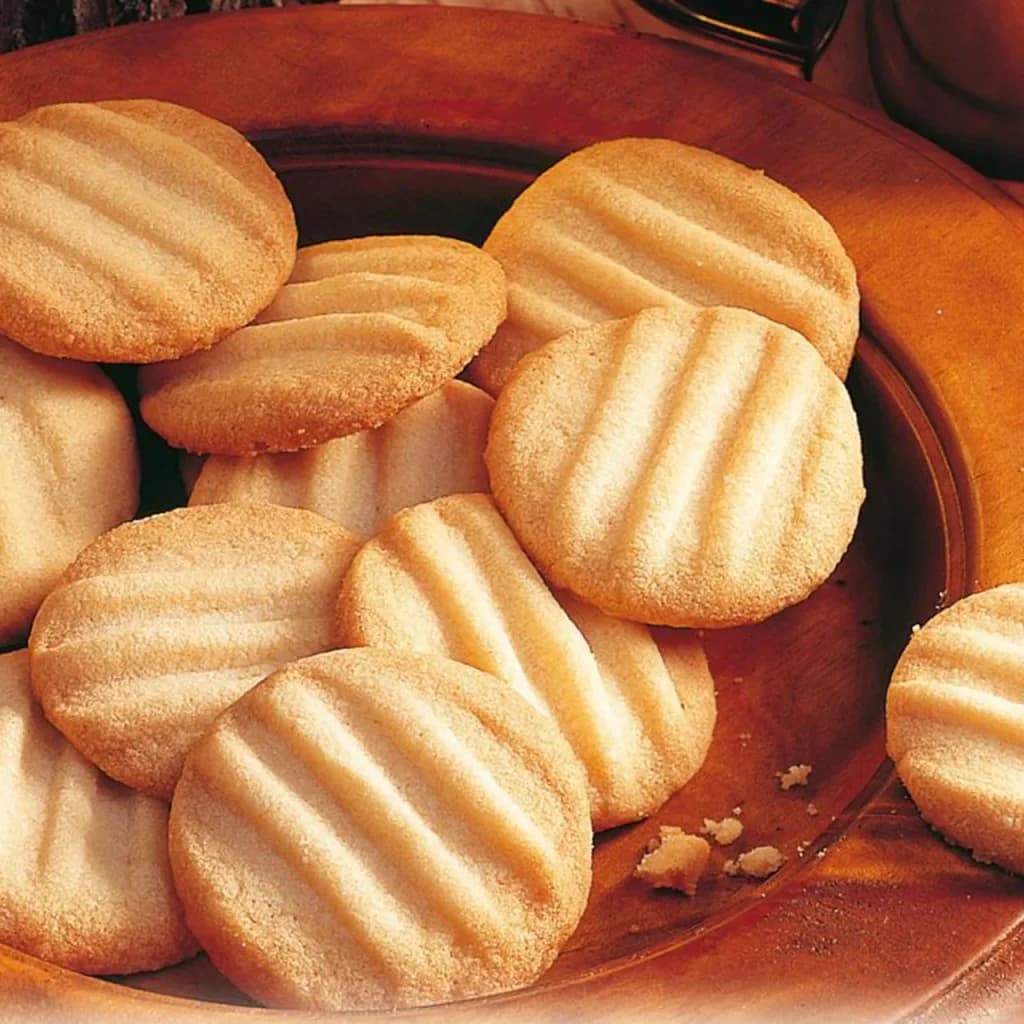
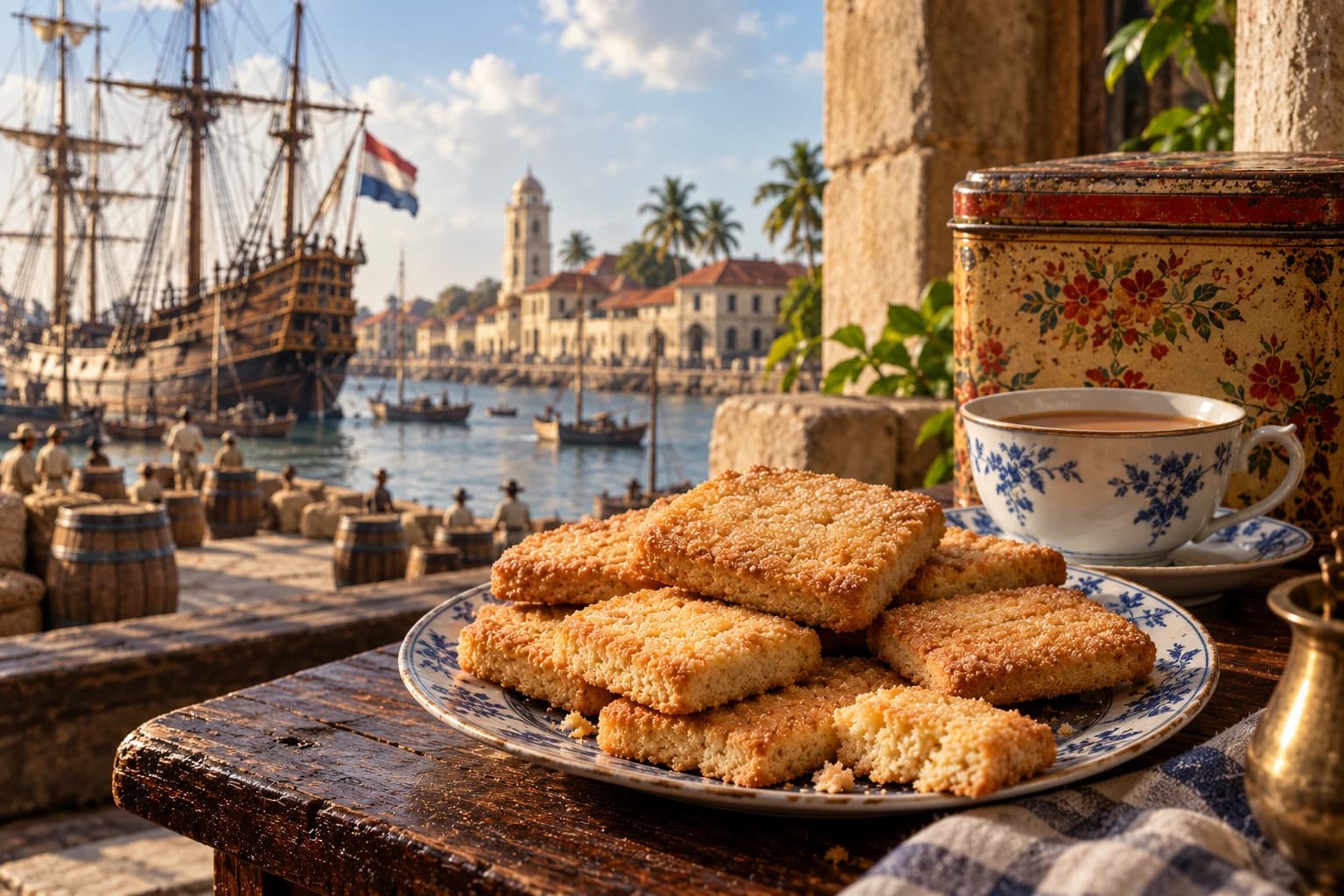
The interesting part is that viskothu was not originally an English word. It is connected with the Dutch word beschuit. Today, Dutch beschuit is something closer to a dry, crisp rusk. Its history, however, takes us back to the age of sailing ships, when bread had to survive long journeys at sea.
Fresh bread spoiled quickly on board. Bread baked until it was thoroughly dry could keep much longer. Across European maritime traditions, hard ship’s biscuit became an essential provision, and the Dutch had their own forms of it, including what was known as scheepsbeschuit.
Dutch vessels carried these provisions across the same seas that eventually brought them to Ceylon. Somewhere through that long period of contact, the word entered local speech. Sinhala absorbed forms associated with beschuit, eventually giving us the familiar viskothu.
Two Colonial Histories on One Tea Tray
By the time British rule transformed the island into one of the great tea-growing centres of the world, the word was already here. That creates an unexpectedly lovely piece of Sri Lankan history.
The tea on the table belonged largely to the British plantation age. The word for the biscuit beside it carried an echo of the Dutch maritime age. Two periods of colonial history that rarely sit beside one another in textbooks ended up meeting every afternoon on an ordinary tea tray.
No one drinking tea in a village home in the 1940s or buying biscuits from a bakery in the 1960s needed to know any of this. The words and customs had long since stopped feeling foreign. They had become ours.
The Biscuit Changed Too
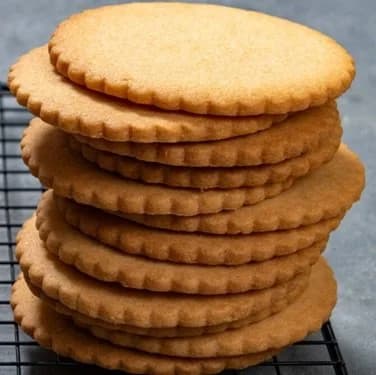
The biscuits themselves had changed over time. The Dutch beschuit was not the sweet tea biscuit most Sri Lankans would recognise today. It was closer to hard bread or a rusk, designed partly for keeping rather than pleasure. Once the word entered local use, however, its meaning broadened.
Viskothu came to mean biscuits of many kinds: plain bakery biscuits, sweet biscuits, rusks, homemade varieties, the kinds kept in tins for visitors and the kinds children were given with afternoon tea.
Names such as hulling viskothu also survived in local usage. Their individual histories are much harder to trace, and it would be too easy to claim that every biscuit carrying the word came directly from a Dutch recipe. The stronger connection is with the name. What Sri Lankans later did with that name was something entirely our own.
The Memory Inside the Word
Perhaps that is why the history is so easily overlooked. For most people, viskothu does not summon images of Dutch sailing ships. It brings back something much closer: a grandmother opening a biscuit tin, a tea shop beside an old road, a bakery counter with glass jars lined up behind it, or a railway station on a wet hill-country afternoon.
There might have been a rusk, a plain biscuit, or one of those slightly hard bakery biscuits that softened immediately when dipped into hot tea. Every child eventually learnt the danger of dipping a biscuit for one second too long. It would break, disappear into the cup and have to be rescued with a spoon.These are hardly great historical moments. But sometimes they are exactly where history survives.
Still Time for Tea
The Dutch left Ceylon at the end of the eighteenth century. The British left almost a century and a half later. The plantation economy changed, railway refreshment rooms disappeared or were altered, and many old neighbourhood bakeries closed their doors.
Yet tea remains. So does viskothu. A British-era habit and an older Dutch-derived word still sit comfortably together without announcing where either came from.
Perhaps that is one of the most Sri Lankan things about them. We absorb things, alter them and live with them for so long that eventually they lose the feeling of having come from elsewhere. Somewhere between an old Dutch ship, a Ceylon railway station and the biscuit tin in a grandmother’s pantry, beschuit became viskothu.by then, nobody was thinking about empires.It was simply time for tea.
Visit us: https://trippingsrilanka.com/stories