The Morning That Changed Ceylon Tea
On the morning of 30 July 1883, Colombo witnessed an event that would help shape the commercial future of Ceylon.
Inside the premises of Somerville & Co., under the auspices of the Ceylon Chamber of Commerce, merchants gathered for the first public tea auction held in Colombo.
It may not have appeared momentous at the time. There were no grand celebrations, no public procession and no certainty that the island’s young tea industry would become a global success.
Yet inside that auction room, amid ledgers, wooden desks, ceiling fans and the steady voices of brokers, the foundations of one of Ceylon’s most important trading traditions were being laid.
That morning marked the beginning of a commercial system that would connect the plantations of the central highlands with buyers, exporters and tea drinkers across the world.
Before the Auction Bell
Tea was still a relatively new chapter in the island’s history.
Before tea became famous, coffee had dominated the highlands. Coffee estates covered large parts of the central hills and shaped the fortunes of planters, merchants and agency houses.
But when disease devastated the coffee industry, planters were forced to search for another crop capable of surviving in the cool, misty hills.
Tea gradually emerged as the answer.
By the 1870s, small quantities of Ceylon tea had begun reaching foreign markets. One of the earliest recorded consignments sent to London in 1873 reportedly weighed only around 23 pounds, or approximately 10 kilograms.
It was a modest beginning for an industry that would later become known across the world.
Colombo Becomes the Gateway of Ceylon Tea
As more estates turned to tea, Colombo began to change.
Warehouses filled with wooden chests. Brokers examined samples from distant plantations. Clerks recorded weights, grades and prices by hand. Ships waited in the harbour to carry Ceylon tea towards London and other international markets.
The city was becoming the commercial gateway between the plantations of the central highlands and the tea drinkers of the world.
Tea may have been grown in the hills, but it was sold, priced, shipped and promoted through Colombo.
This made the city central to the rise of Ceylon tea.
Inside an Old Colombo Auction Room
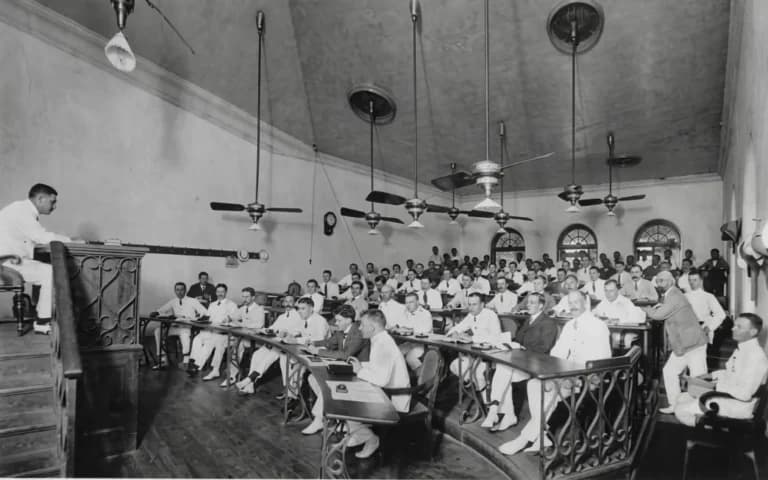
The surviving photographs of Colombo’s early tea auctions reveal a world very different from the modern trading floor.
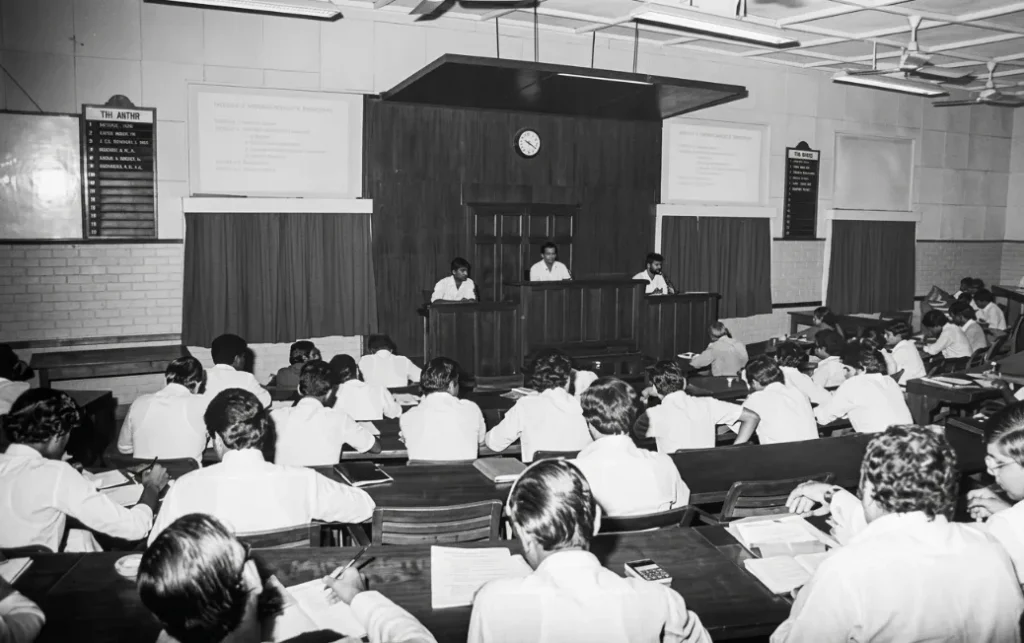
Men dressed in white suits sat shoulder to shoulder along polished wooden benches. Papers, catalogues and samples were arranged before them. High ceilings and long windows provided relief from Colombo’s heat, while ceiling fans turned slowly above the crowded room.
At the front stood the auctioneer.
His voice carried across the hall as each lot was announced. Buyers listened closely, weighing quality against price. A raised hand, a brief nod or a spoken figure could decide where thousands of pounds of tea would eventually be shipped.
The room would have been filled with its own distinctive atmosphere: the murmur of conversation, the turning of catalogue pages, the sharp rhythm of bidding and perhaps even the faint aroma of dry tea leaves carried in from nearby warehouses.
The Auction as a Meeting Point
Every transaction inside the auction room connected several worlds.
Behind each lot were the hills of Nuwara Eliya, Dimbula, Uva or Kandy. There were planters watching the weather, factory workers tending machinery and estate communities harvesting leaves by hand.
In Colombo, all that labour was translated into grades, prices and contracts.
The auction room therefore became a meeting point between plantation life and international commerce.
It was where the green slopes of the highlands became part of a global trading system.
The Journey from the Hills to Colombo
Long before a tea lot entered the auction room, its journey began among the mist-covered plantations.
Leaves were plucked in the cool morning air and carried to estate factories. There, they were withered, rolled, fermented, dried and carefully graded. The finished tea was packed into chests and transported down from the hills.
In the nineteenth century, this journey could be long and demanding.
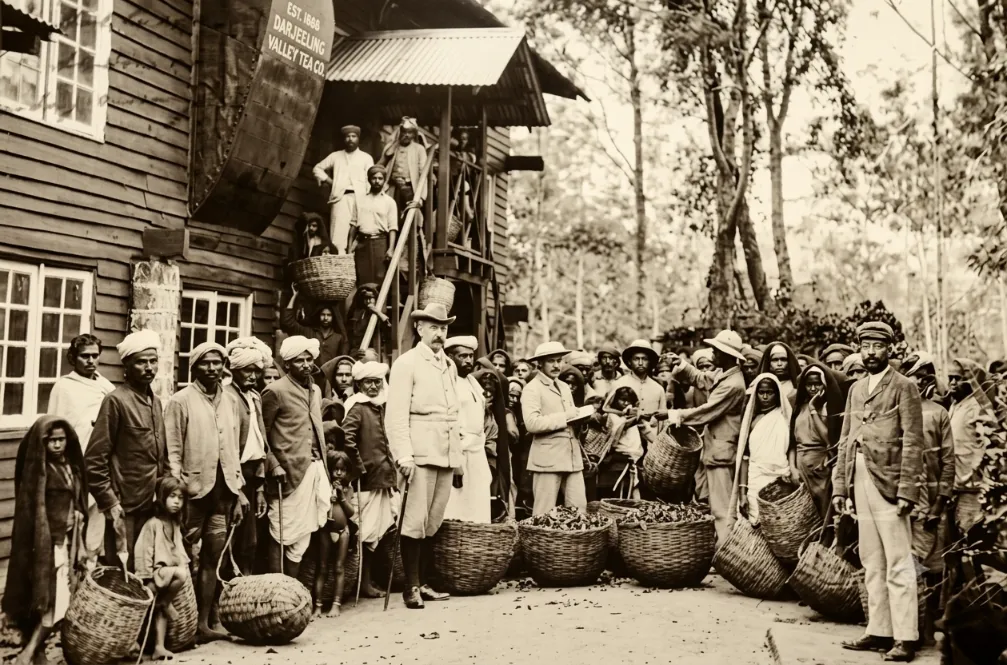
Tea travelled by cart and railway through steep mountain passes before arriving in Colombo. Roads, railway stations, bridges, warehouses and harbour facilities all became part of the tea journey.
Once in the city, the chests entered a busy commercial network of warehouses, brokers, exporters and shipping agents.
Samples were taken for inspection. Catalogues were prepared. Buyers assessed the colour, aroma and strength of each tea.
The auction was therefore not simply a sale. It was the final stage of a long process linking the plantation landscape with international markets.
A Weekly Ritual of Trade
As the tea industry expanded, the Colombo auction grew with it.
What began as a single public auction gradually became one of the city’s most important commercial institutions. Week after week, tea from estates across the island passed through Colombo’s auction system.
For generations of brokers and buyers, auction day became a familiar ritual.
They arrived carrying catalogues marked with notes and prices. They knew the reputations of estates and recognised the characteristics of teas grown in different elevations.
Some teas were prized for their delicate fragrance. Others were valued for strength, colour or brightness in the cup.
Business relationships were built over decades. Rival buyers competed intensely inside the auction room, yet many belonged to the same close-knit commercial community.
Beyond the formal transactions, the auction was also a meeting place where news travelled quickly. People discussed crop conditions, shipping delays, overseas demand and changes in international taste.
Colombo’s tea trade was conducted not only through numbers, but through experience, judgement and personal trust.
The People Hidden Behind Every Chest
The history of the tea auction is often told through merchants, brokers and exporters. But every chest of tea represented the work of many people who were rarely seen inside the auction room.
Across the hill country, generations of estate workers cultivated and harvested the crop under difficult conditions. Their knowledge, skill and labour sustained the industry.
Factory workers transformed fresh leaves into finished tea. Railway employees and cart drivers transported it towards Colombo. Warehouse workers handled the chests, while clerks prepared records and shipping documents.
The auction room stood at the centre of this vast human network.
While buyers discussed grades and prices, the true story of Ceylon tea stretched far beyond Colombo — from plantation paths and factory floors to railway platforms, harbour warehouses and ships crossing the Indian Ocean.
Colombo and the Rise of Ceylon Tea
The growth of the auction strengthened Colombo’s position as the commercial capital of the island.
Tea companies established offices in the city. Warehouses rose near the harbour. Shipping firms connected Colombo with ports across Europe, Asia and the Middle East.
The tea trade influenced the architecture and rhythm of colonial Colombo.
Fort became a district of trading houses, banks and mercantile offices. Clerks hurried through shaded corridors carrying files and telegrams. Brokers moved between tasting rooms, warehouses and auction halls.
The city’s prosperity became closely tied to the plantations of the interior.
By the early twentieth century, the words Ceylon Tea had acquired international recognition. Tea packed and traded through Colombo appeared in homes, hotels and restaurants thousands of miles away.
Few consumers drinking a cup of Ceylon tea would have imagined the crowded auction rooms where its price had first been decided.
More Than a Commercial Transaction
There was something almost theatrical about the traditional tea auction.
The auctioneer controlled the room through pace and tone. Buyers had only moments to make decisions. Familiar gestures and brief exchanges carried financial consequences.
Yet behind the competition was a shared understanding of tea.
Experienced buyers could study dry leaves, inhale their aroma and taste an infusion before estimating how the tea might perform in a distant market. Their judgement was shaped by years of practice.
The auction therefore combined commerce with craftsmanship.
It required knowledge of plantations, seasons, manufacturing methods and consumer preferences. A tea was never merely tea. Its character was influenced by elevation, rainfall, soil, climate and the skill with which it had been produced.
The Skills Behind Tea Buying
Tea buying was not guesswork.
A trained buyer had to understand the difference between teas from various elevations and districts. A tea from Uva could carry a different character from a tea grown in Nuwara Eliya or Dimbula. Weather, season and manufacturing quality all affected the final cup.
Buyers examined leaf appearance, colour, aroma, liquor and strength.
They had to think not only about quality, but also about market demand. A tea suitable for one buyer or country might not suit another.
This made the auction room a place of sharp commercial intelligence.
It was where taste, memory, instinct and market knowledge came together.
The Echo of an Earlier Colombo
Looking at an old photograph of the Colombo tea auction, it is easy to imagine the room coming back to life.
The ceiling fans begin to turn. Catalogues open across the desks. A broker whispers to a colleague. The auctioneer calls the first lot, and the room falls briefly silent.
Outside, Colombo continues with its daily life. Carts move through the streets, ships rest in the harbour and clerks hurry between mercantile offices.
Far away in the hills, another day’s tea is being gathered.
The people in that room could not have fully known what the first auction would become. They could not have foreseen the international reputation Ceylon tea would earn or the millions of lives the industry would eventually touch.
But on that July day in 1883, they began a tradition that connected Colombo to the world.
Why the First Colombo Tea Auction Matters to Old Ceylon
The first Colombo tea auction matters because it marks the moment when Ceylon tea gained a formal commercial stage.
It connected several major themes in Old Ceylon:
- The fall of coffee and the rise of tea
- The growth of plantation agriculture
- Colombo’s emergence as a trading city
- The role of brokers, merchants and exporters
- The labour of estate communities
- The importance of railways and harbour infrastructure
- The creation of a global Ceylon Tea identity
It was not simply a business event.
It was the beginning of a marketplace that helped turn Ceylon tea into an international name.
A Legacy Still Brewing
Today, the tea trade operates in a world of digital systems, global logistics and rapid communication. Yet the legacy of the old auction room remains.
Every time Sri Lankan tea is packed for export, served in a hotel or brewed in a family kitchen, it carries a small part of that history.
It recalls the plantations where the story began, the railways that carried tea towards the coast and the crowded Colombo rooms where buyers once raised their hands to secure a lot.
The first Colombo tea auction was not merely an event in commercial history.
It was the moment when a young industry found its marketplace — and when Colombo began selling the taste of Ceylon to the world.
Final Thoughts: When Colombo Sold Tea to the World
The first public tea auction in Colombo on 30 July 1883 helped shape the future of Ceylon.
It gave the island’s growing tea industry a commercial centre. It strengthened Colombo’s role as the trading heart of the island. It connected planters, brokers, workers, railwaymen, warehouse staff, exporters and overseas buyers into one system.
From that first auction room at Somerville & Co., Ceylon tea began to build the reputation that would make it known across the world.
For Tripping Sri Lanka readers, this story is more than business history.
It is Old Ceylon in motion: tea from the hills, trains to Colombo, brokers in white suits, ships in the harbour, and the beginning of a global legacy still brewing today.